Get involved: send your pictures, video, news and views by texting CHNEWS to 80360, or email
4:20pm Saturday 6th February 2010
On Sunday February 2, 1947, a grim spell of weather began with snow borne on a howling wind. The snow stuck, then squeaked underfoot. Not until the end of March would the last of the big drifts be cleared. Giggleswick author WR Mitchell recalls a long chat with Edith Carr who, with her family, endured that grim winter at Capon Hall, on Malham Moor. Though Edith has died, her vivid tales live on.Jet aircraft pass over Craven with a whine and a whoosh. Edith was to remember to her dying day when a nine-week-long silence was broken by an unfamiliar sound: the drone of aircraft – RAF Dakotas – circling above Malham Moor. The crews were looking for black crosses hurriedly created on an unbroken snowscape. Here they had arranged to offload emergency rations for farmfolk and their livestock.
6:00pm Saturday 30th January 2010
The bad weather experienced in the past few weeks was nothing compared to the winter of 1962-63 when the “Big Freeze” started in January and lasted until March. Here reporter, Lesley Tate, looks back at the Herald archives to discover how Craven coped
2:10pm Saturday 23rd January 2010
Embsay Moor Reservoir is approaching its 100th birthday. It was constructed between 1904 and 1910 and village historian Monika Butler has been researching its past, including the extensive coverage by the Craven Herald and West Yorkshire Pioneer. She will be giving a talk on the subject to an open meeting of Embsay with Eastby Horticultural Society in the village hall on Friday February 12. Here she gives a taster of what she has discovered.
10:10am Saturday 16th January 2010
Former agent of the Bolton Abbey Estate John Sheard has published a new book looking at the history of the village. He was land agent for more than 30 years, but his connections with the estate date back long before that. He was born in Cross Hills and, during the Second World War, his family obtained permission to locate their caravan on the estate at Barden, where they spent many weekends and holidays. His new book, Times Past at Bolton Abbey, is a collection of historic events that helped it to develop and improve. Here Mr Sheard explains more about his connections with the estate.
10:30am Saturday 9th January 2010
When, just over 60 years ago, Giggleswick author Bill Mitchell joined The Dalesman in Clapham, he lodged for a time with the family of Jack Winton, who was gardener at Ingleborough Hall – the mansion of the Farrer family which had become a residential centre for urban youngsters. Helping Jack to bring a semblance of tidiness to a world-famous rock garden, in a tucked-away corner of the grounds, introduced him to the works of Reginald Farrer (1880-1920), gardener and author extraordinary, as Bill describes here.
9:50am Saturday 2nd January 2010
In January 1960, during blizzard conditions, the Glasgow-to-London express collided with a Leeds goods train on a railway embankment near Settle, claiming the lives of five people. Here, reporter Lesley Tate looks back at the Herald’s report on the crash.
5:00pm Tuesday 29th December 2009
Airebank Mills was built in 1780 and was used for cotton production until the 1930s. During its early days, it was plagued by fires and, in November 1912, it saw “one of the most fierce and disastrous conflagrations ever recorded in the history of Craven”.
10:10am Saturday 19th December 2009
Giggleswick historian WR Mitchell ponders on the strange but compelling story of Dr William Cartman, his great-great grandfather on his mother’s side. He was headmaster of Ermysted’s Grammar School, Skipton, for over three decades and included the Bronte family among his friends. Cartman often took services at Haworth Church and dined with the Brontes at the Parsonage. He officiated at the funeral services for both Charlotte Bronte and her father.
5:08pm Tuesday 15th December 2009
Craven has many long-established independent businesses and among them is Simpsons of Skipton. It was launched in Embsay in the 1880s, but, as demand grew, it moved to Skipton High Street and then Swadford Street. Today it remains a family-owned business, selling classic, country and contemporary menswear and accessories. It is still based in Swadford Street, but on the opposite side of the road – it was originally where Specsavers is. Here we reproduce, in its original form, an article from the West Yorkshire Pioneer (which merged with the Craven Herald in the 1930s) in November 1926. The article is provided by Gargrave resident Anne White, granddaughter of one of the founders, WA Simpson. The history of any well-established business always contains an abundance of interest, and a study of the methods on which it has been built up is both informative and fascinating.


10:10am Saturday 5th December 2009
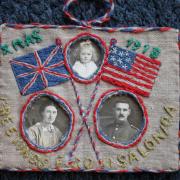
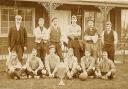
This year has seen the deaths of nearly all of the last servicemen who saw action during the First World War. The outcome of that conflict could have been very different had it not been for one Settle man, Bertram Lambert. He invented the box respirator – the first effective gas mask that was used by troops in the Great War. Here his great great niece, Jeanne Carr, recounts his life story. Her great grandfather, William, was Bertram’s eldest brother.
Enter your postcode, town or place name
Find your next job now in Skipton and beyond
Search Now »
Make a date in Skipton and surrounding areas now
Search Now »
Homes for sale and to let in Skipton and surrounding areas.
Search Now »
Cars for sale throughout Skipton and surrounding areas
Search Now »